
Falls are the leading cause of injury for seniors over 65. In fact, the CDC says
more than 14 million, or one in four older adults, report falling every year. These falls are common and costly, but they are also preventable.
Injuries sustained in falls at home impact everything from independence to mobility to overall quality of life. The good news? Falls are not a natural part of the aging process. With the right tools and mindset, many falls can be prevented. Geriatric physical therapy in Michigan forms the foundation of prevention.
This type of therapy is focused on older adults over the age of 65 to improve their function, mobility, strength, and balance. By addressing age-related declines and conditions such as arthritis or osteoporosis, licensed physical therapists in Metro Detroit can help seniors regain independence and improve their quality of life through gentle exercises that help with daily activities and fall prevention.
Why Are Falls More Common With Aging?
Balance and coordination can become more challenging as we age due to natural changes in the body. Fall risk can be elevated with:
- Joint stiffness or arthritis
- Loss of muscle strength (especially legs and hips)
- Decreased balance and coordination
- Changes in vision or inner ear function
- Side effects from medications
- Slower reaction times
- Fear of falling
These factors can make walking on uneven surfaces, climbing stairs, or getting up from a seated position not only more difficult, but risky as well.
Physical Therapy and Fall Prevention
To address the causes of these balance problems, physical therapy in Michigan is designed to be proactive – not reactive. Rather than waiting to begin therapy after a fall, seniors are advised to get help with movement, strength, posture, and balance before a fall. A licensed physical therapist can identify specific risk factors for each senior and create a personalized plan.
A typical assessment in the office may include:
- Gait
- Reaction time and coordination
- Leg and core strength
- Joint mobility
- Posture and alignment
Physical therapy focuses on strengthening specific muscle groups to help older adults move more confidently and reduce the likelihood of falls during daily activities. These muscle groups include:
- Stability: hips and thighs
- Posture and control: core muscles
- Quick adjustments: ankles and feet
Exercises to Improve Balance and Coordination
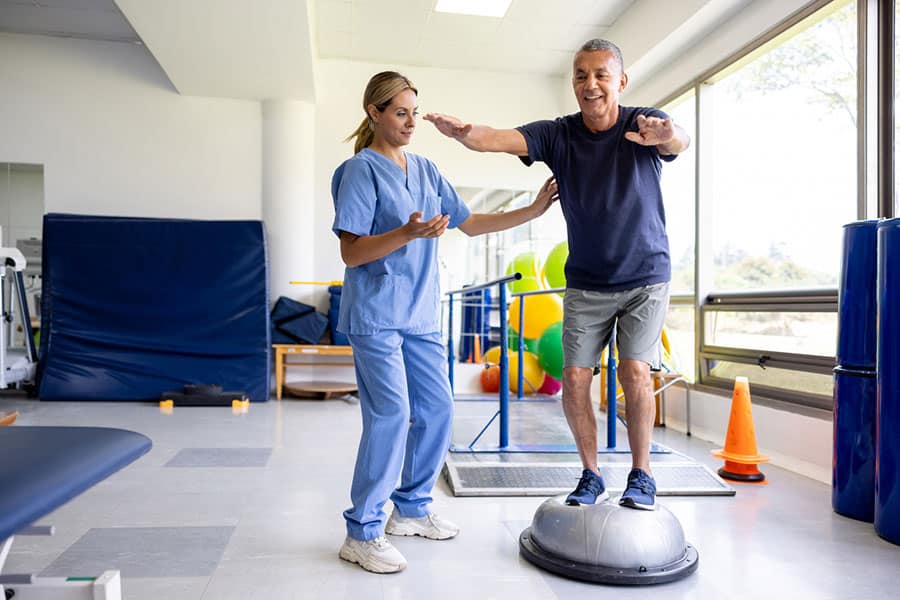
At the core of geriatric physical therapy is balance training. Common exercises include:
- Standing balance activities
- Weight-shifting and controlled movements
- Gait training for walking pattern improvement
- Practice on uneven or changing surfaces
Another goal of physical therapy for seniors is to improve flexibility and mobility. Because stiff joints and tight muscles limit movement and boost the risk of falls, the hips, knees, ankles, and spine need to remain flexible. By strengthening flexibility and mobility, seniors can react quicker when off balance.
The Fear of Falling: A Domino Effect
For many seniors, the fear of falling is common and can even cause them to resist being active. However, reducing activity only makes seniors more weak and unstable. Rebuilding confidence is yet another goal of geriatric physical therapy. Through guided exercises and education on proper body mechanics, older adults can become more comfortable staying active and independent.
As we mentioned before, fall prevention is best when addressed before a serious injury or fall occurs. Using physical therapy in Michigan as a proactive approach to healthy aging is a smart and safe way to embrace older adulthood.
Contact Specialty Physical Therapy
Are you or a loved one concerned about a fall risk? We can help create a personalized balance program to improve strength, stability, and confidence in everyday movement. Schedule an evaluation today!