Whether you play competitive sports, exercise for fun, or just want to keep active, a sports injury can sideline you in an instant. Sprains, strains, tendon problems, and overuse injuries can all limit movement and cause pain, making it hard to return to the activities you enjoy.
Depending on the injury, laser therapy in Michigan can bolster your comprehensive physical therapy treatment plan. This noninvasive treatment uses concentrated light energy to help manage pain and inflammation while boosting the body’s natural healing processes.
How Does Laser Therapy Work?
Therapeutic laser treatments deliver specific wavelengths of light to targeted areas of the body. This light is absorbed by cells, and influences biological processes responsible for tissue repair and inflammation.
Unlike surgical lasers, therapeutic lasers don’t cut or remove tissue. Rather, it’s an external treatment used by licensed physical therapists in Michigan in conjunction with other rehabilitation techniques.
What Sports Injuries Can Be Treated With Laser Therapy?
Sports injuries don’t just occur as a result of hard hits or dramatic falls. Sometimes, they result from repetitive movements, increased training intensity, and accumulated stress on muscles and joints.
Laser therapy can be used for conditions involving:
- Muscle strains
- Ligament sprains
- Tendon injuries
- Joint pain
- Soft-tissue injuries
- Overuse injuries
- Sports-related inflammation
Before beginning treatment, it’s important to determine the root of your pain. Because pain in the same area can have different causes, an evaluation by a Metro Detroit physical therapist is necessary before a treatment plan can be developed.
What Does Laser Therapy Feel Like?
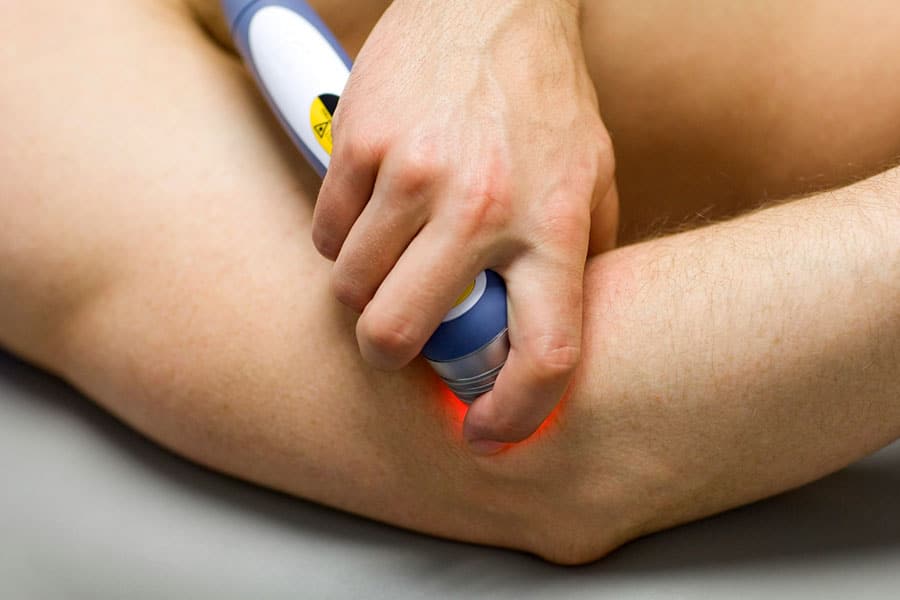
Therapeutic laser treatment involves the use of a handheld device used over the area of pain. It’s a comfortable procedure for the patient; the only thing you may notice is warmth during the session, depending on the type of laser and treatment settings. This treatment doesn’t come with the pain or risk that surgery does, and there are no incisions. Best of all, laser therapy has minimal recovery time.
Your Michigan physical therapist will explain the process to you before beginning the session.
Laser Therapy is Only One Part of Sports Rehabilitation
For an athlete, the goal of treatment isn’t just to feel less pain. It’s also to restore strength, coordination, flexibility, balance, and range of motion.
That’s why laser therapy is used as one part of a larger rehabilitation program. Your therapist may also suggest therapeutic exercises, stretching, strengthening, manual therapy, or sport-specific activities as part of your recovery.
This combination of treatments addresses both your symptoms and the physical limitations that may be inhibiting your return to play.
Don’t Rush Your Return to Sports
You may be itching to get back to training or competition and may be tempted to resume activity as soon as you start feeling better. However, just because you’re feeling better doesn’t mean your injured muscle, tendon or ligament is ready for the demands of your particular sport.
A physical therapist in Metro Detroit will monitor your progress and let you know when it’s safe to return to your normal level of activity. The last thing you want to do is place stress on the area too soon, which could compromise the whole recovery.
Every sports injury is different, and laser therapy isn’t necessarily right for every condition. First, we will determine the nature and extent of your injury, then create a treatment plan based on your symptoms, activity level, and recovery goals.
Contact Specialty Physical Therapy
Is a sports injury keeping you on the sidelines? Contact us today to schedule an evaluation and learn whether laser therapy would be an appropriate addition to your overall rehabilitation program.