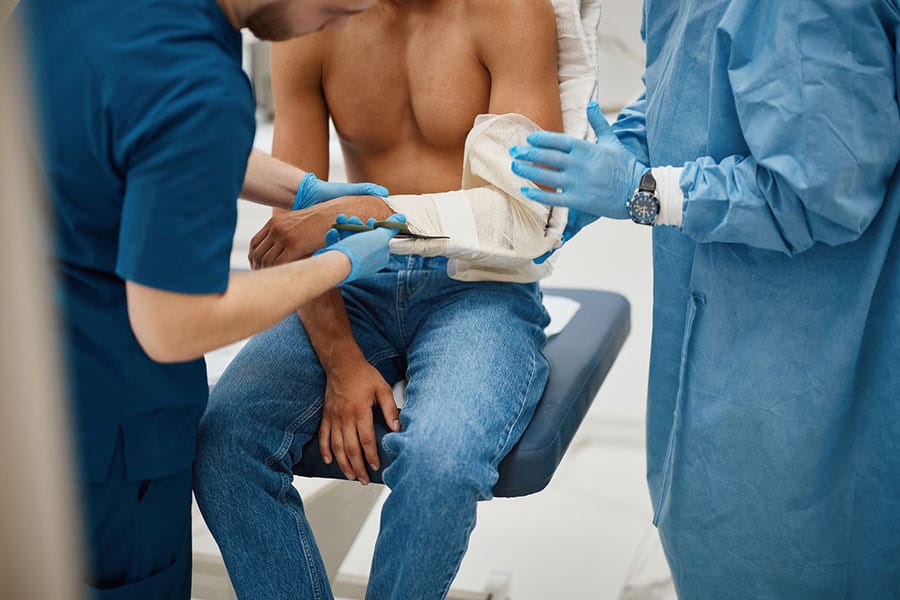
It’s a major milestone to get your cast, brace, or sling off after an injury. You may be tempted to start using your limb normally again, but may be surprised to find out that the affected area feels stiff, weak, or just different than it did before.
Don’t worry, this is normal. After a period of limited movement, muscles and joints often need more time to regain strength, flexibility, and normal function. Depending on the injury and your recovery, orthopedic rehabilitation in Michigan can make that gradual transition safe.
The Cast Is Off: Why Don’t I Feel Back to Normal?
A cast, brace, or sling is designed to protect the injured area during the healing process. However, long periods of immobilization mean you’re not using that body part nearly as much as you used to.
Once the support is removed, it’s common to experience:
- Muscle weakness
- Joint stiffness
- Reduced range of motion
- Difficulty with movements that were once easy
- Changes in balance or coordination
- Hesitation about putting weight or pressure on the area
How long these effects last will depend on the injury, as well as how long the area was in a cast, brace, or sling.
Restoring Your Range of Motion
After weeks of restricted movement, it can be awkward or difficult to bend a knee, straighten an elbow, or rotate a shoulder.
Orthopedic rehabilitation in Metro Detroit can include exercises and hands-on techniques that gradually improve flexibility and range of motion. Instead of forcing the joint to move normally right away, a treatment plan can be developed by a therapist according to your specific healing rate and tolerance.
Rebuilding Strength Gradually
Muscles can lose strength after not being in use for a while. Perhaps your injured leg tires more quickly or maybe your arm isn’t ready to lift what it could before the injury.
Your licensed physical therapist can develop a plan for you that incorporates strengthening exercises at an appropriate pace. Then, those exercises can be adjusted as you progress, placing increasingly greater demands on the recovering area.
Learning to Trust the Injured Area Again
Physical recovery isn’t the only goal with orthopedic rehabilitation. It’s natural to feel cautious about using that part of your body again after weeks of immobilization. You may hesitate to put all your weight on an ankle, or you may think twice about reaching overhead after a shoulder injury.
Guided rehabilitation allows you to practice movements in a controlled setting and gradually work toward more demanding activities.
Getting Back to Everyday Life
The goal of orthopedic rehabilitation in Michigan is to help you return to the activities that are important to you in everyday life. Whether that involves moving up and down stairs with confidence, returning to work, or getting back on the playing field, your rehabilitation plan can be customized to your injury and your goals.
In the end, theremoval of a cast, brace, or sling isn’t the finish line; rather, it marks the beginning of the next stage of recovery. How quickly you progress depends on factors such as the type and severity of the injury, how long you were immobilized, and how your body is healing.
It’s important to adhere to the recommendations of your healthcare providers and avoid jumping right back into the activities you used to enjoy. Patience is key, but you will get there with the right help!
Contact Specialty Physical Therapy
If you’re living with weakness, stiffness or limited movement following an orthopedic injury, our therapists can evaluate your needs and determine whether orthopedic rehabilitation may be best for you. Contact us today to learn more about your options.