The pain is finally gone after that sports injury you suffered. You’re walking fine, getting up the stairs no problem, and going about your day without thinking of the injury. So of course now you’re thinking the next step is to get back on the court, on the field, or on the trail. Think again.
Just because you’re pain-free doesn’t necessarily mean your body is ready to meet the rigors of your sport. Sports injury rehabilitation is the final stage of your recovery journey as you bridge the gap from feeling better to actually returning to the same level of activity you’re used to.
Pain Relief vs. Functional Recovery
While you may no longer have discomfort during everyday activities, there could still be some lingering weakness, stiffness or reduced control in that injured area. You may not even know these limitations are lurking in the background until you try to sprint, jump, pivot, or throw.
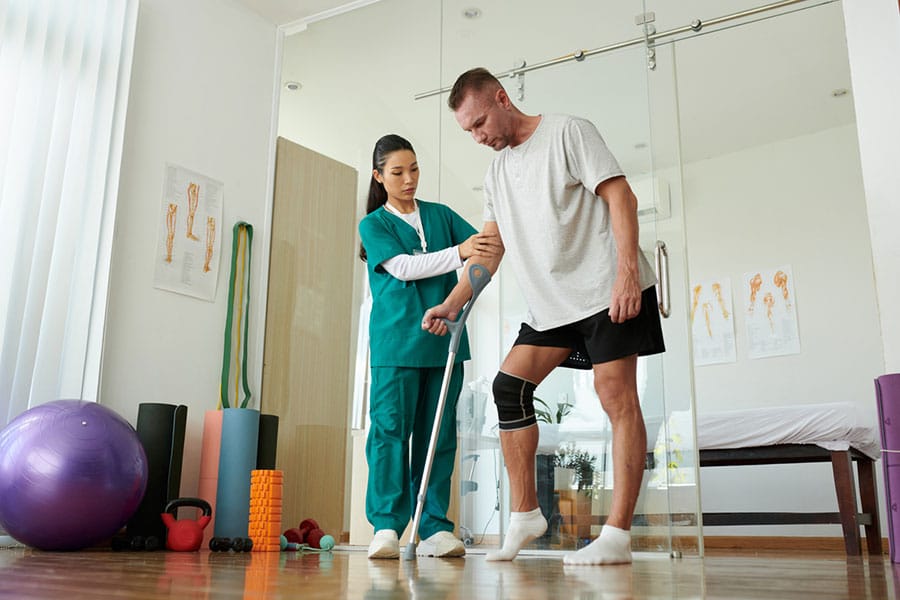
With sports injury rehabilitation, your Michigan physical therapist will assess the function of the injured area and determine if you need additional rehabilitation before a return to play.
Rebuilding Strength and Mobility
After an injury, strength and mobility are often compromised due to reduced activity.
Sports injury exercise can help you rebuild these areas and address differences between the injured and uninjured sides of the body.
Depending on your specific injury and sport, exercises can target:
- Muscle strength and endurance
- Joint mobility
- Range of motion
- Stability
- Flexibility
- Power necessary for more demanding movements
The end goal is to prepare your injured ankle, knee or shoulder for the forces and repetitive movements that your sport demands.
Don’t Forget Balance, Coordination and Control
Depending on the sport, you may have to stop suddenly, pivot on a dime, stick a landing, or react in an instant to another player. All of these movements require a blend of balance, coordination and control.
For example, you may feel fine running in a straight line, but as soon as you have to cut sideways or land on one leg, you may notice weakness, instability or reduced control.
Sports injury rehabilitation is designed to incorporate progressively more challenging exercises to help you handle those extra skills before jumping back into competition.
Practice the Movements Your Sport Demands
Rehab doesn’t look the same for a runner, tennis player or a soccer player. That’s why your therapist will create a customized treatment plan that caters to your specific sport, injury and goals.
Your therapist will gradually introduce movements such as:
- Running and changing speed
- Throwing or reaching overhead
- Jumping and landing
- Cutting or pivoting
- Accelerating and decelerating
When you are able to practice these movements in a controlled environment, your therapist can observe how your body responds to the increasing demands placed on it.
Build Back Gradually
Returning to sports doesn’t have to be an all-or-nothing approach. You don’t have to jump right into full competition right away. In fact, a gradual progression is often best, starting with lower-intensity exercises before advancing to drills, practices and games. This progression can be tailored to your sport and your individual condition.
By taking it slow, your therapist can evaluate symptoms or limitations that went unnoticed during less demanding activities.
So, When Are You Ready to Play?
There’s no one-size-fits-all answer here. It depends on:
- The athlete
- Type and severity of the injury
- Healing progress
- Strength, mobility, and movement quality
- Demands of the sport
All of these factors can influence return-to-sport decisions – decisions that must be made between your doctor, physical therapist, and other healthcare professional. The important thing to remember is that the absence of pain isn’t an automatic green light to return to your previous level of activity.
Contact Specialty Physical Therapy
Are you recovering from an injury and want to safely return to your favorite sport or activity? Contact us in one of our four convenient locations to learn more about individualized sports injury rehabilitation in Michigan.